Mixed batteries in, clean chemistry out, at up to 1,500 kg an hour. Every cell is photographed and logged as it goes. Built in Britain, running now.
Or email us directly at info@2a2i.co.uk
Mixed batteries go in loose and the feeder does the rest. No bridging, no manual spreading.
The feeder takes the mixed pile into single file across two independent lanes, on OBS-2. Nothing overlaps, every cell is seen on its own, and each lane runs independently.
Two cameras cover each sorting line, four in total on OBS-2. Chemistry, size and brand are recognised as the cell goes past, and it lands in the log as it happens.
The classifier retrains on your feedstock while it runs. Manual sorting labour down by up to 80%, accuracy held at target, 28 cells a second.
Each chemistry leaves in its own stream, checked before it goes. One person runs the line. 100% configurable to your downstream. Fractions are set up the way you want them.
A timed electric actuator drives each cell into its own stream. A three phase supply and a floor is the whole utility requirement.
Live feedback to our mainframe, 24 hours a day, so your purity and quality hold.
Anything it isn't sure about goes round again rather than spoiling a clean batch. Reconfigure live as your downstream changes.
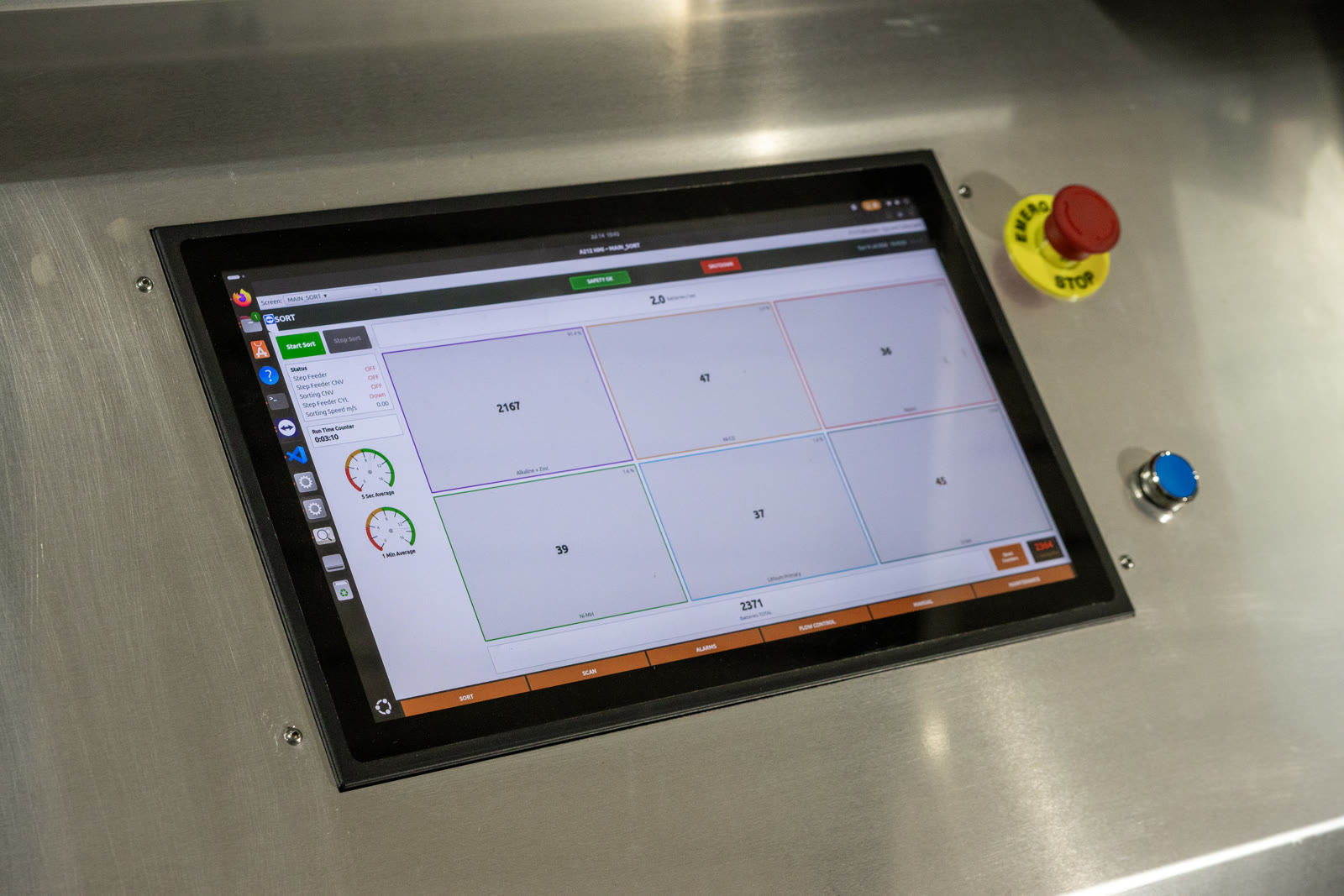
EU 2023/1542 wants chemistry-specific proof. Every cell is photographed and logged as it runs, so the evidence is already there when you need it.
| Size | Brand | Chemistry |
|---|---|---|
| The main sizes we sort. Other household batteries on request. | Examples of the brands we report on, other brands can be trained on request. | Examples of the chemistries we sort. |
| AAA | Duracell | Alkaline |
| AA | Energizer | Lithium Ion |
| C | Panasonic | Lithium Primary |
| D | Varta | Nickel Metal Hydride (NiMH) |
| 9V | GP Batteries | Nickel Cadmium (NiCd) |
| Amazon | Zinc Carbon | |
| IKEA | ||
| Costco |
Your list will not be this list. Tell us the brands in your stream and we add them. A new brand is trained and running inside one working shift.
Misplaced lithium is what starts fires in waste sorting plants. The OBS identifies lithium ion and lithium primary cells and takes them out of the alkaline and zinc carbon fractions at 28 cells a second.
Around 3%-4% of cells are not classified and go to the unprocessed fraction. That is the same order across every sorting technology on the market, X-ray included.
The figure moves with your feedstock, not with the machine. Collection mix, cell condition, material age and foreign object load all shift it. Anyone quoting you a rate before they have seen your material is quoting you someone else’s material.
Nothing in the unprocessed fraction reaches your downstream buyer.
Identical vision system and software. Start smaller and add capacity later, on site.
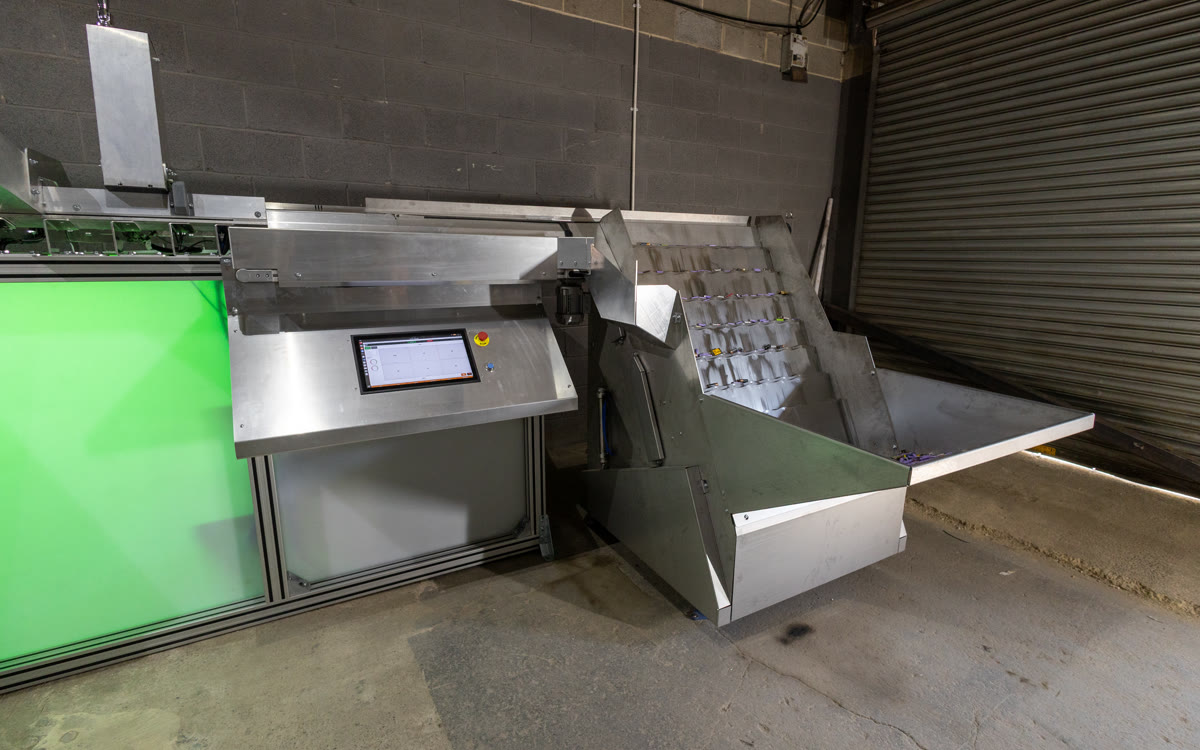
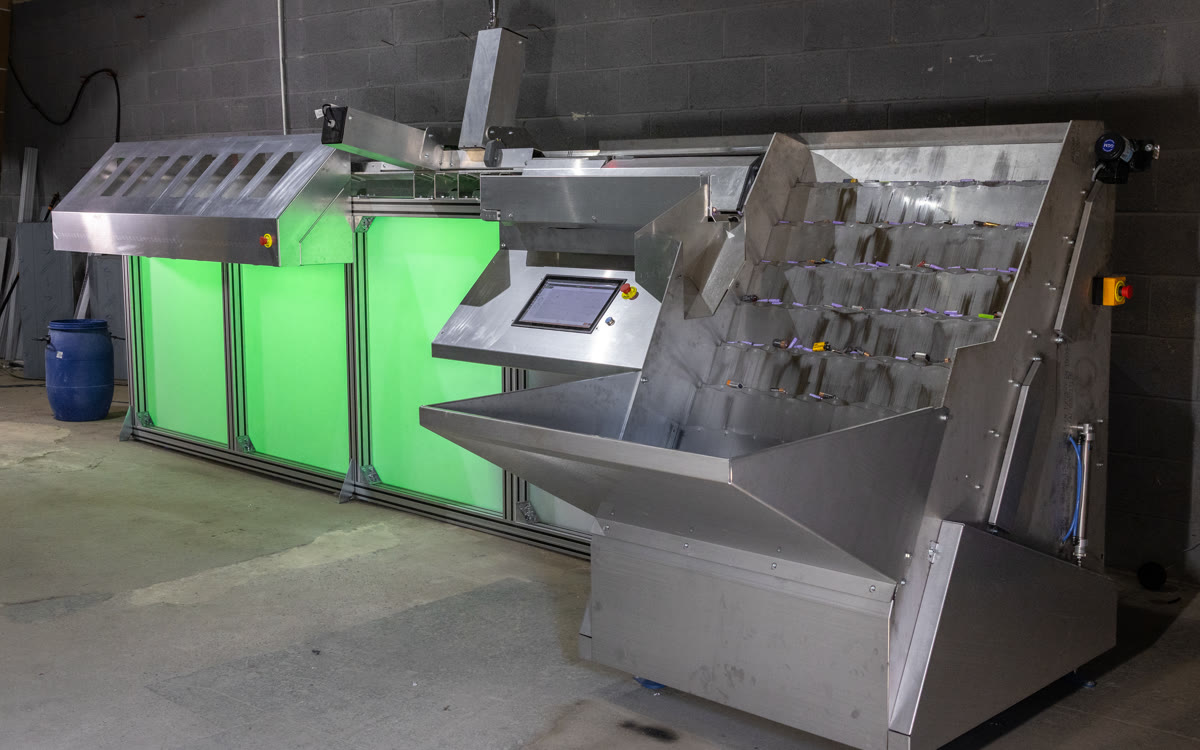
Throughput depends on your battery mix. We size it against your material.
Size your plant in one question. Tell us your annual tonnage and we will show you the configuration, the floor space, the power and what it does to your sorting headcount. Then generate a proposal.
Privacy notice: we use the details you submit to respond to your enquiry.

| Size band | Share % by count | Avg mass (g) | Share by mass |
|---|---|---|---|
| Total | 100.0 | — | weighted avg (g) |
| Annual capacity, one machine | — |
| Tonnes processed per year | — |
| Hours · shift pattern | — · — |
| Recommended | — |
| Alternative | — |
| Floor area · connected load | — · — |
| Capacity headroom | — |
| Labour | — |
| Electricity | — |
| SaaS licence | — |
| Service & spares | — |
| Consumables | — |
| Misclassification | — |
| Total annual opex | — |
| Operating cost per tonne | — |
| Manual headcount for same volume | — |
| OBS operators | — |
| Headcount displaced | — |
| Annual labour avoided | — |
| Gate fee revenue | — |
| Sorted-fraction uplift | — |
| Less annual opex | — |
| Net annual cash flow | — |
| Total investment (net of grant) | — |
| 10-year net position | — |
| Return on investment (10 yr) | — |
Twenty minutes on video. We run the machine, you ask whatever you want. Nothing to prepare.
Or email us directly at info@2a2i.co.uk
We build machines that sort waste batteries by chemistry, cleanly and at scale. Mixed cells go in. Sorted, clean chemistry streams come out, at rates up to an indicative 1,500 kg an hour. Every cell is photographed, classified and logged as it passes through.
The Optical Battery Sorter (OBS) is not a prototype. The original system ran in production for over two years and processed and classified more than 50 million batteries in that time. What we have now is a generational step change on that proven base: the same core approach, rebuilt with everything two years of real running taught us.
OBS uses optical spectral imaging to identify each cell. There is no radiation, no shielding and no licensing to manage. Classification accuracy targets up to 99% on the primary chemistries, and we hold to those as targets until they are proven on customer feedstock at industrial scale.
The machine is built in Britain and running now. It comes as OBS-1, a single sorting line, or OBS-2, two parallel lines on one platform, with a single unit field-upgradeable to a dual on site. Whichever the size, it runs on one operator and a three phase supply. Our latest generation uses all-electric ejection, so there is no compressed air, no compressor and none of the power draw and maintenance that come with it. That is a saving for the customer and a genuine point of difference against the older air-jet machines.
We are a small engineering company that would rather prove a number than market one. If you have a battery waste stream to sort, we would welcome the chance to show you the machine at work.
We are engineers. We can design, configure and deliver a complete plant.
Send a short enquiry and the team will come back to you with the next step.
Email: info@2a2i.co.uk
Location: United Kingdom
Privacy notice: we use your details to respond to your enquiry.